Forex trading is often painted as a technical numbers game, yet the biggest moves happen inside your head. Studies of more than 28.5 million trades reveal that loss aversion pushes most traders to cling to losers and bail out early on winners. You might expect that mastering trading strategy would guarantee profits, but the real challenge is training your mindset to follow those strategies with unflinching discipline.
Table of Contents
- How Emotions Impact Forex Decisions
- Building a Strong Trading Mindset
- Common Psychological Traps in Trading
- Practical Ways to Improve Mental Discipline
Quick Summary
| Takeaway | Explanation |
|---|---|
| Emotions shape trading decisions. | Recognizing the influence of emotions helps improve trading strategies and outcomes. |
| Fear and greed drive trading behavior. | Understanding how these emotions affect decisions can prevent impulsive actions and improve consistency. |
| Develop a structured trading plan. | A clear plan helps mitigate emotional responses and reduces the risk of impulsive trading. |
| Maintain a trading journal. | Documenting trades and emotions aids in recognizing patterns and enhancing psychological resilience. |

|
| Practice mental training regularly. | Techniques like mindfulness and visualization strengthen discipline and emotional control in trading.
How Emotions Impact Forex Decisions
Forex trading is as much a psychological battle as it is a financial strategy. Emotions play a critical role in determining trading success, often becoming the invisible barrier between consistent profits and persistent losses. Understanding how psychological factors influence decision making can transform a trader’s approach and performance.
The Psychological Minefield of Trading Decisions
Traders constantly navigate a complex emotional landscape that can dramatically impact their trading outcomes. Research analyzing over 28.5 million trades revealed a profound psychological phenomenon known as loss aversion. This research showed traders exhibit counterintuitive behavioral patterns where they become risk-averse with potential gains and paradoxically risk-seeking when facing losses.
This emotional response creates a dangerous psychological trap. When traders experience gains, they become overly cautious and conservative, potentially limiting their profit potential. Conversely, when confronting losses, traders often make increasingly risky decisions in an attempt to recover, leading to even greater financial damage. The emotional rollercoaster of trading can cloud judgment, pushing traders away from rational, strategic decision making.
Fear and Greed: The Twin Emotional Drivers
Two primary emotions dominate forex trading psychology: fear and greed. Fear manifests as hesitation, preventing traders from executing well-planned strategies. A trader might recognize a perfect entry point but become paralyzed by the potential of losing money. This emotional blockade leads to missed opportunities and reduced performance.
Greed, on the other hand, drives traders to overtrade, risking more capital than their strategy dictates. When experiencing a winning streak, traders might abandon their carefully constructed risk management plans, believing they have discovered an unbeatable method. This emotional impulse frequently results in significant portfolio drawdowns.
Developing Emotional Intelligence in Trading
Mastering forex trading requires developing robust emotional intelligence. Successful traders learn to recognize and manage their emotional responses, transforming instinctive reactions into calculated decisions. This involves creating structured trading plans, implementing strict risk management protocols, and maintaining psychological discipline.
Practical strategies include maintaining a trading journal to track emotional patterns, practicing mindfulness techniques to remain calm under pressure, and consistently reviewing trades objectively. By treating trading as a skill that requires continuous emotional and strategic refinement, traders can gradually build the psychological resilience necessary for consistent success.
The journey to becoming a consistently profitable forex trader is not just about understanding market mechanics. It is about understanding oneself. Learn more about trading psychology strategies that can help you develop the mental framework for long-term trading success.
Building a Strong Trading Mindset
A robust trading mindset is the foundation of consistent success in forex markets. Unlike technical skills that can be learned through practice, developing a resilient psychological framework requires deliberate and continuous self-improvement. Traders who master their mental approach can transform potential emotional pitfalls into strategic advantages.
Cultivating Psychological Resilience
Psychological resilience in trading goes beyond mere emotional control. Emerging research suggests AI could play a crucial role in identifying psychological trading risks, indicating the growing recognition of mental dynamics in trading performance. Successful traders develop the ability to maintain composure under pressure, view losses as learning opportunities, and consistently execute their trading plans regardless of market volatility.
Key components of psychological resilience include maintaining emotional detachment from individual trade outcomes, accepting that losses are an inherent part of trading, and developing a growth mindset. This means viewing challenges as opportunities for improvement rather than personal failures. Traders who embrace this perspective can turn setbacks into valuable learning experiences that refine their strategies over time.
Developing a Systematic Trading Approach
A systematic approach acts as a psychological buffer against emotional decision making. By creating and adhering to a structured trading plan, traders can reduce the impact of impulsive reactions. This involves establishing clear entry and exit rules, predefined risk management parameters, and a consistent method for analyzing market conditions.
Research analyzing millions of trades highlighted how loss aversion can significantly impact trading decisions. A systematic approach helps mitigate these psychological biases by removing emotional judgment from individual trade decisions. Traders should develop a comprehensive trading plan that includes specific criteria for:
- Position sizing
- Risk per trade
- Maximum daily loss tolerance
- Performance review protocols
Mental Training and Self-Improvement
Building a strong trading mindset requires ongoing mental training, similar to physical fitness for athletes. This involves techniques like meditation, visualization, and consistent self-reflection. Maintaining a detailed trading journal allows traders to track not just financial performance but emotional patterns and psychological responses to different market conditions.
Successful traders invest time in understanding their psychological triggers, developing emotional intelligence, and creating strategies to manage stress. This might include practices like:
- Daily mindfulness meditation
- Regular performance review sessions
- Cognitive reframing techniques
- Stress management exercises
The following table organizes practical mental training techniques mentioned in the article, detailing their purpose and effect on trading discipline:
| Technique | Purpose | Effect on Trading Discipline |
|---|---|---|
| Mindfulness Meditation | Enhance self-awareness & emotional control | Reduces impulsiveness and stress |
| Trading Journal | Track trades and emotions | Reveals patterns, supports improvement |
| Visualization Exercises | Mentally prepare for trading scenarios | Builds confidence and focus |
| Cognitive Reframing | Transform negative thoughts | Improves resilience and adaptability |
| Stress Management Exercises | Manage psychological pressure | Maintains mental clarity |
| Regular Performance Reviews | Objectively assess trading behavior | Promotes disciplined, objective trading |
This table provides a clear overview of actionable techniques for improving the trading mindset, making it easier for readers to adopt these practices.
Ultimately, building a strong trading mindset is a continuous journey of self-discovery and improvement. Learn more about developing advanced trading strategies that integrate psychological principles for long-term success.
Common Psychological Traps in Trading
Forex trading demands not just financial acumen but also psychological awareness. Traders frequently encounter subtle mental pitfalls that can dramatically undermine their performance and profitability. Understanding and recognizing these psychological traps is the first step toward developing a more disciplined and rational trading approach.
Here is a summary table highlighting common cognitive biases and emotional triggers in trading, along with their effects as described in the article:
| Bias/Trigger | Description | Typical Effect on Trading |
|---|---|---|
| Loss Aversion | Traders become risk-averse with gains but risk-seeking with losses | Holding losers, exiting winners early |
| Anchoring | Fixating on an initial piece of information or price point | Suboptimal trade decisions |
| Confirmation Bias | Seeking information that supports existing beliefs | Ignoring contradictory evidence |
| Fear of Missing Out (FOMO) | Entering trades out of fear of missing opportunities | Impulsive, poorly analyzed trades |
| Overconfidence | Taking excessive risks after wins | Overtrading, breaking risk rules |
| Emotional Impulses | Allowing emotions to override trading plans | Inconsistent trading results |
This table helps clarify the specific psychological pitfalls forex traders face and their potential impacts on trading outcomes.
Cognitive Biases in Trading Decisions
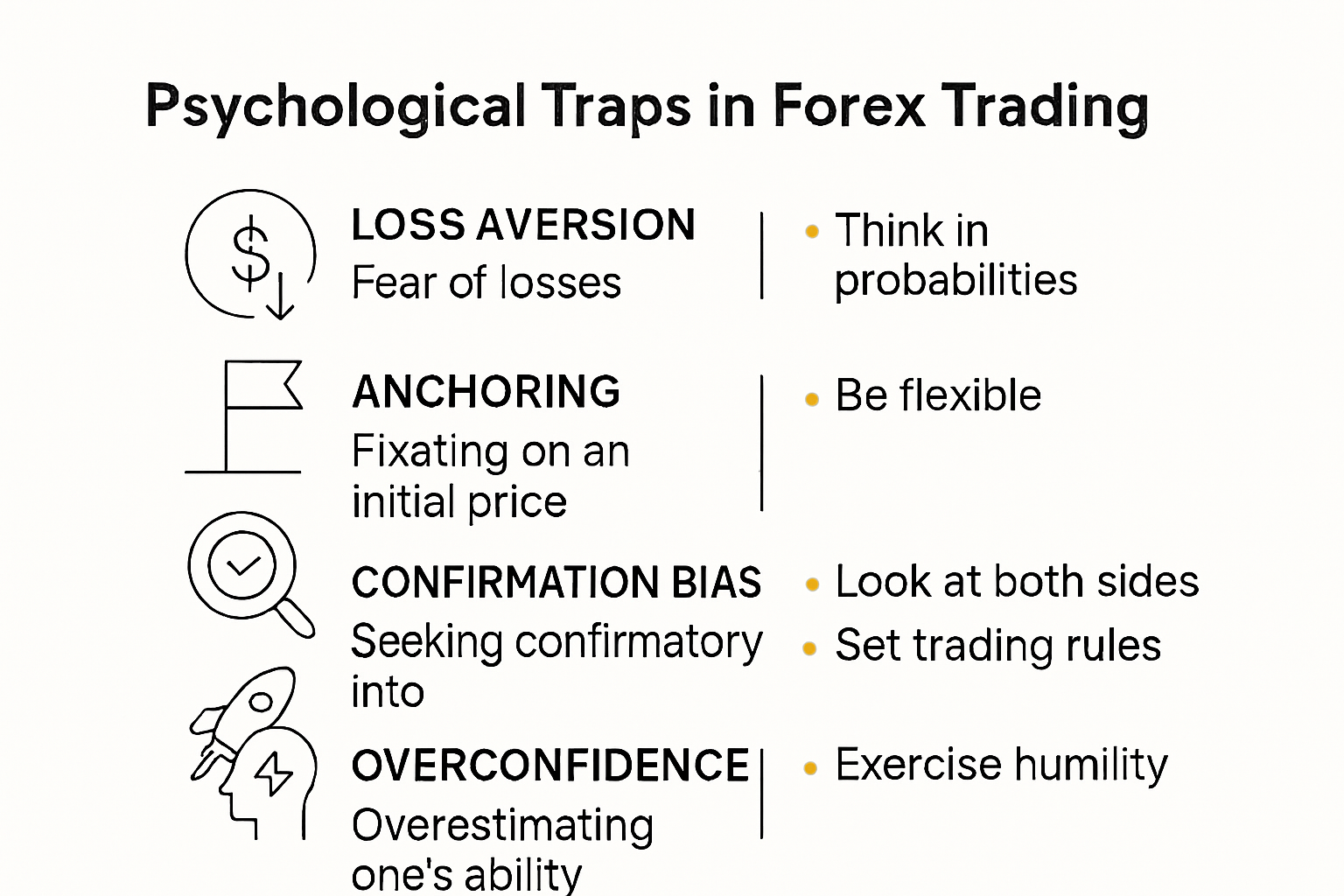
Research from Investopedia highlights several critical psychological traps that can derail trading strategies. The anchoring trap represents one of the most insidious cognitive biases, where traders become fixated on an initial piece of information or price point, causing them to make suboptimal decisions.
Confirmation bias emerges as another significant challenge. According to WikiFX, traders often seek information that validates their existing beliefs while systematically ignoring contradictory evidence. This selective perception can create a dangerous echo chamber, preventing traders from objectively evaluating market conditions and potential risks.
Emotional Trading Triggers
Emotional responses frequently transform rational trading plans into impulsive, destructive behaviors. Analysis from NinjaSpread identifies several key emotional triggers that compromise trading performance:
- Fear of Missing Out (FOMO): Driving traders to enter trades without proper analysis
- Overconfidence: Leading to excessive risk-taking after a series of successful trades
- Loss Aversion: Causing traders to hold losing positions longer than strategically prudent
These emotional responses can transform potentially profitable strategies into consistent loss-making scenarios. Traders who succumb to these triggers often find themselves making decisions based on momentary impulses rather than calculated strategies.
Developing Psychological Resilience
Overcoming psychological traps requires a multifaceted approach. Successful traders develop robust mental frameworks that recognize and neutralize these cognitive vulnerabilities. This involves creating structured trading plans, implementing strict risk management protocols, and maintaining consistent self-reflection.
Practical strategies include maintaining a detailed trading journal, regularly reviewing trade decisions objectively, and developing a disciplined approach to market analysis. Traders must learn to separate emotional responses from strategic decision-making, treating trading as a systematic process rather than an emotional experience.
Recognizing psychological traps is an ongoing journey of self-improvement. Learn more about advanced trading strategy development that integrates psychological awareness into your trading approach. By understanding these mental pitfalls, traders can transform potential weaknesses into strategic strengths, ultimately improving their long-term trading performance.
Practical Ways to Improve Mental Discipline
Mental discipline represents the cornerstone of successful forex trading. Unlike technical skills that can be learned through repetition, developing psychological control requires consistent effort and strategic self-improvement. Traders who master mental discipline transform their approach from reactive emotional responses to proactive, calculated decision making.
Structured Self-Assessment Techniques
Emerging research exploring psychological risk management suggests that systematic self-assessment can significantly enhance a trader’s mental resilience. This involves creating comprehensive frameworks for understanding personal psychological patterns and triggers. Effective self-assessment techniques include maintaining a detailed trading journal that tracks not just financial outcomes but emotional states, decision-making processes, and psychological responses during different market conditions.
Key elements of structured self-assessment involve documenting:
- Emotional state before and after trading
- Reasons behind specific trade decisions
- Psychological barriers encountered
- Stress levels and mental clarity
- Adherence to predefined trading plans
By consistently recording these insights, traders can identify recurring psychological patterns, understand their emotional vulnerabilities, and develop targeted strategies for improvement.
Developing Disciplined Trading Habits
According to Investopedia’s trading discipline guidelines, developing mental discipline requires creating and strictly adhering to structured trading protocols. This means establishing clear, non-negotiable rules that govern trading behavior, regardless of emotional impulses or market fluctuations.
Practical habits for cultivating trading discipline include:
- Setting precise entry and exit criteria
- Implementing fixed risk management percentages
- Creating predetermined stop-loss and take-profit levels
- Limiting daily trading time and number of trades
- Establishing mandatory cooling-off periods after significant losses
These structured approaches remove emotional variability, transforming trading from an unpredictable activity to a systematic process. By reducing discretionary decision-making, traders can minimize the impact of psychological biases.
Mental Training and Psychological Conditioning
Mental discipline in trading parallels athletic training, requiring consistent practice and psychological conditioning. This involves developing techniques that strengthen emotional regulation, enhance focus, and build psychological resilience. Recommended practices include meditation, visualization exercises, and cognitive reframing techniques.
Traders can implement mental training through:
- Daily mindfulness meditation sessions
- Visualization of successful trading scenarios
- Cognitive behavioral techniques for managing stress
- Regular physical exercise to support mental clarity
- Professional psychological counseling focused on trading psychology
The goal is not to eliminate emotions but to develop a balanced, controlled approach that recognizes emotional signals without being overwhelmed by them. Learn more about developing advanced trading strategies that integrate psychological discipline and strategic thinking.
Ultimately, mental discipline is a continuous journey of self-improvement, requiring patience, commitment, and a willingness to objectively examine and transform psychological patterns that hinder trading success.
Frequently Asked Questions
What is the role of emotions in forex trading?
Emotions, particularly fear and greed, significantly impact trading decisions, often leading to counterproductive behaviors that affect profitability. Recognizing and managing these emotions is crucial for successful trading.
How can I develop a strong trading mindset?
A strong trading mindset can be developed through structured self-assessment, cultivating psychological resilience, establishing disciplined trading habits, and engaging in mental training practices like mindfulness and visualization.
What are common psychological traps in trading?
Common psychological traps in trading include loss aversion, overconfidence, and fear of missing out (FOMO). These can lead to poor decision-making and substantial losses if not managed effectively.
How can I improve my mental discipline in trading?
Improving mental discipline involves applying structured trading protocols, maintaining a detailed trading journal, and practicing mental conditioning techniques such as cognitive reframing and stress management exercises.
Ready to Master the Psychology of Trading?
Conquering your emotions is often the missing piece between strategy and profit in forex trading. The article highlighted how psychological traps like fear, greed, and loss aversion can quietly sabotage your results, even when you have the right technical tools. If you are tired of letting hesitation or overconfidence affect your trades, you deserve real solutions that go beyond theory.
Take action now and join a community built for traders who want consistent profits. At FrankFX, you get access to proven daily trading signals and real-time mentorship, helping you put your new mental discipline into action. Whether you want to use automated tools, live trading rooms, or advanced analysis, FrankFX will help you develop the confidence and discipline to execute your strategy with less stress. Discover which mentorship and VIP packages fit your goals and see how focused guidance can help you build lasting trading habits. Visit FrankFX now and start trading with a stronger mindset today.
Recommended
- Technical Analysis Explained: A 2025 Guide for Traders and Investors 2025
- Currency Pairs Explained for Traders and Investors 2025 2025
- HOW TO CHOOSE A BOOM AND CRASH BROKER | FRANKFX TRADING ACADEMY
- THE DIFFERENT TYPES OF BOOM AND CRASH TRADING STRATEGIES | FRANKFX TRADING ACADEMY