Range trading sounds simple. You’re just buying at the bottom and selling at the top of a range, right? But get this, over 70 percent of the time, most major markets move sideways rather than in clear trends. That flips everything you thought you knew about trading. Because the secret is not catching the trend—it’s mastering the art of trading the bounce between support and resistance. This approach might be more predictable than chasing trends, and that opens up a completely different way to look at the markets.
Table of Contents
- What Are Range Trading Strategies And Why Use Them?
- Key Concepts In Range Trading: Supports And Resistance
- The Importance Of Market Psychology In Range Trading
- How Range Trading Strategies Are Applied In Different Markets
- Factors Influencing The Effectiveness Of Range Trading Strategies
Quick Summary
| Takeaway | Explanation |
|---|---|
| Identify Support and Resistance Levels | Use historical price action to determine critical price points where buying and selling occur. |
| Adapt Strategies to Market Conditions | Tailor range trading techniques based on the specific dynamics of each market, such as forex or cryptocurrencies. |
| Emphasize Risk Management | Implement precise stop-loss and take-profit strategies to protect your investments and manage risk effectively. |
| Monitor Market Psychology | Understand the emotional factors that influence trader behavior, helping you make better-informed decisions. |
| Utilize Technical Indicators | Apply various technical indicators to confirm trading ranges and assess market conditions effectively. |
What Are Range Trading Strategies and Why Use Them?
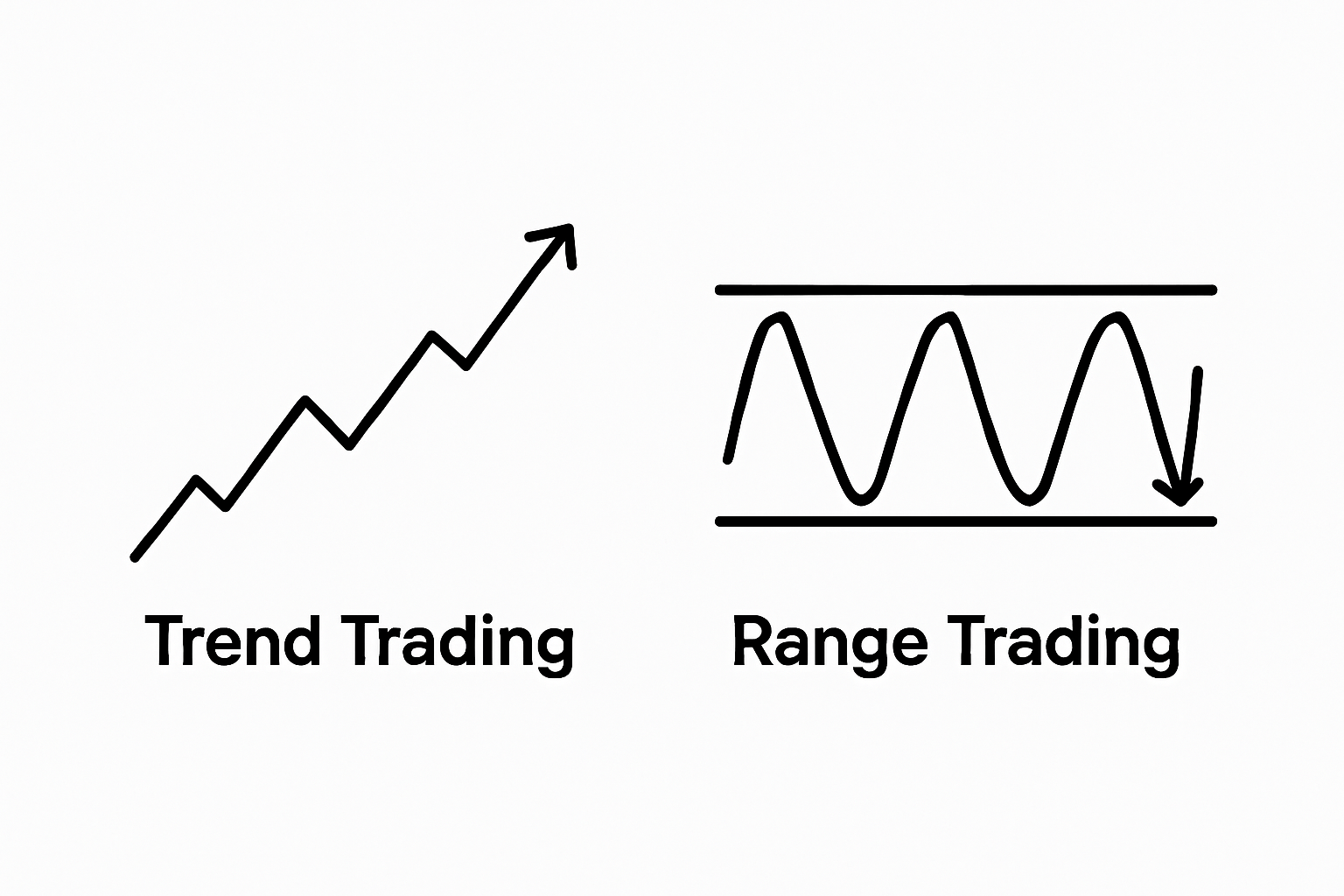
Range trading strategies represent a fundamental approach in financial markets where traders capitalize on price movements within a defined horizontal boundary or trading channel. Unlike trend-based strategies that focus on directional price movements, range trading strategies exploit predictable price oscillations between established support and resistance levels.
Understanding the Core Mechanics
At its essence, range trading involves identifying a price channel where an asset consistently fluctuates between two parallel horizontal lines. These lines represent key psychological price levels where traders anticipate buying (support) and selling (resistance) activities. The strategy relies on the premise that financial instruments tend to bounce between these established boundaries rather than breaking through them consistently.
Traders implementing range trading strategies look for markets exhibiting relatively stable price behavior, typically characterized by:
- Consistent price movements between identifiable support and resistance levels
- Low volatility environments
- Sideways or consolidating market conditions
- Assets with predictable trading patterns
Strategic Advantages of Range Trading
Range trading offers multiple advantages for traders seeking methodical and potentially lower-risk investment approaches. According to research examining trading strategy performance, range trading can provide more predictable outcomes compared to trend-following methods.
The primary benefits include:
- Reduced Market Dependency: Traders can profit in both sideways and non-trending markets
- Clear Entry and Exit Points: Support and resistance levels provide precise trading parameters
- Risk Management: Predefined price boundaries allow for more controlled position sizing
Successful range trading requires disciplined technical analysis, precise timing, and a deep understanding of market psychology. Traders must continuously monitor price movements, adjust their strategies, and recognize when market conditions shift from range-bound to trending states.
Key Concepts in Range Trading: Supports and Resistance
Support and resistance levels form the fundamental architectural framework of range trading strategies, serving as critical technical indicators that help traders understand potential price movement boundaries. These conceptual lines represent psychological price points where market participants collectively demonstrate buying or selling pressures that temporarily halt or reverse price momentum.
Defining Support and Resistance
Support levels represent price points where buying interest typically becomes strong enough to prevent further price declines. Conversely, resistance levels mark price points where selling pressure tends to emerge, preventing further price increases. These levels are not absolute fixed lines but dynamic zones where market participants make collective trading decisions.
Traders identify these levels through multiple analytical methods:
- Historical price action and previous trading ranges
- Significant price bounce points
- Volume-based trading activity
- Psychological round number prices
- Technical indicator signals
Psychological Dynamics Behind Support and Resistance
According to research examining technical trading rules, support and resistance levels reflect complex market psychology. Traders and investors collectively create these boundaries through their accumulated trading behaviors, memory of previous price interactions, and shared perceptions of an asset’s perceived value.
Key psychological factors influencing these levels include:
- Collective Memory: Traders remember previous price interactions
- Emotional Trading: Fear and greed drive market participant behaviors
- Confirmation Bias: Traders seek validation of their existing market perspectives
Successful range traders recognize that support and resistance levels are not impenetrable barriers but probabilistic zones where price movements are more likely to pause or reverse. Advanced traders understand these levels represent fluid market dynamics requiring constant reassessment and adaptive strategies.

The Importance of Market Psychology in Range Trading
Market psychology plays a critical role in range trading, serving as the underlying mechanism that drives price movements and trader decision making. Understanding the emotional and cognitive processes that influence market participants helps traders develop more nuanced and effective trading strategies.
Emotional Drivers of Market Behavior
Traders operate within a complex psychological environment where emotions like fear, greed, and uncertainty significantly impact market dynamics. Emotional intelligence becomes a crucial skill in range trading, enabling traders to recognize and navigate the psychological currents that drive price oscillations within defined trading ranges.
Key emotional factors that influence trading decisions include:
- Psychological attachment to specific price levels
- Collective market sentiment
- Individual trader risk tolerance
- Perception of market momentum
- Cognitive biases and heuristic thinking
Cognitive Biases in Range Trading
According to research exploring the psychological aspects of financial markets, traders frequently encounter cognitive biases that can distort rational decision making. These psychological patterns can create predictable market behaviors that skilled range traders learn to anticipate and exploit.
Common cognitive biases impacting range trading include:
- Confirmation Bias: Seeking information that validates existing beliefs
- Anchoring Bias: Overemphasizing initial price references
- Herd Mentality: Following collective market movements
Successful range traders develop robust psychological frameworks that allow them to maintain emotional discipline. They understand that market psychology is not just about understanding others’ behaviors, but also about managing their own psychological responses to market fluctuations. This self-awareness enables traders to make more objective decisions, stick to predefined trading strategies, and avoid impulsive actions driven by momentary emotional reactions.
Below is a table summarizing common cognitive biases that impact range trading decisions, along with brief explanations of each bias effect.
| Cognitive Bias | Description |
|---|---|
| Confirmation Bias | Seeking information that validates existing beliefs |
| Anchoring Bias | Overemphasizing initial price references |
| Herd Mentality | Following collective market movements |
| Emotional Trading | Decisions driven by fear or greed |
| Collective Memory | Reacting based on memories of past price actions |
How Range Trading Strategies Are Applied in Different Markets
Range trading strategies demonstrate remarkable versatility across diverse financial markets, from stocks and cryptocurrencies to forex and commodities. Each market presents unique characteristics that require tailored approaches to effectively implement range trading techniques.
Market-Specific Range Trading Characteristics
The application of range trading varies significantly depending on the specific market dynamics. Forex markets, for instance, typically offer more predictable range-bound behaviors due to their high liquidity and continuous trading environment. Cryptocurrency markets, in contrast, present more volatile range trading opportunities with wider price fluctuations.
Key market considerations for range trading include:
- Liquidity levels
- Trading volume
- Asset price volatility
- Market participant behaviors
- Regulatory environment
Adaptive Range Trading Approaches
According to research analyzing trading strategies across different market segments, successful range trading requires adaptive strategies that recognize the unique characteristics of each market environment. Traders must develop flexible approaches that can quickly adjust to changing market conditions.
Different markets demand specialized range trading techniques:
- Stock Markets: Focus on sector-specific range analysis
- Forex Markets: Utilize currency pair correlation strategies
- Cryptocurrency Markets: Implement more aggressive risk management
- Commodity Markets: Analyze seasonal and geopolitical influences
Effective range traders understand that no single strategy works universally across all markets. They continuously refine their approaches, leveraging technical analysis, market sentiment, and real-time data to identify optimal trading ranges. The most successful traders remain adaptable, recognizing that market dynamics are fluid and require constant reassessment and strategic adjustment.
To help clarify the key differences and strengths, here is a comparison of how range trading strategies are tailored for major financial markets discussed in the article.
| Market Type | Range Trading Characteristics | Adaptive Approach |
|---|---|---|
| Stock Markets | Sector-specific range analysis, moderate volatility | Focus on industry trends and correlations |
| Forex Markets | High liquidity, frequent range-bound behavior | Use currency pair correlations |
| Cryptocurrency Markets | High volatility, wide price fluctuations | Aggressive risk management |
| Commodity Markets | Influenced by seasonality, geopolitics | Analyze external market influences |
Factors Influencing the Effectiveness of Range Trading Strategies
Range trading strategies are not universally effective across all market conditions. Multiple complex factors interact to determine the potential success of these trading approaches, requiring traders to develop sophisticated analytical skills and adaptive techniques.
Market Structure and Technical Indicators
Technical indicators serve as critical tools in evaluating potential range trading opportunities. Traders must carefully analyze multiple indicators to confirm potential trading ranges, understanding that no single indicator provides a comprehensive market perspective. Volatility measurement becomes particularly crucial in determining the reliability of range trading strategies.
Key technical factors influencing range trading effectiveness include:
- Price momentum oscillators
- Volume-based indicators
- Moving average convergence
- Standard deviation measurements
- Historical price pattern recognition
Performance Optimization Considerations
According to research examining trade strategy execution, the effectiveness of trading strategies depends on intricate interactions between market characteristics, trader skills, and external economic conditions.
Critical performance optimization factors include:
- Market Liquidity: Higher liquidity increases trading predictability
- Timeframe Selection: Different trading ranges emerge across various timeframes
- Risk Management: Precise stop-loss and take-profit strategies
- Transaction Costs: Impact of spreads and commissions on strategy profitability
Successful range traders recognize that strategy effectiveness is dynamic, requiring continuous learning, adaptation, and a willingness to modify approaches based on changing market conditions. The most resilient traders develop a nuanced understanding of market psychology, technical analysis, and personal risk tolerance to create robust, flexible trading frameworks.
Ready to Put Range Trading Strategies into Action?
Getting started with range trading can feel overwhelming. You have learned about channels, support and resistance zones, and how market psychology shapes price moves. Still, bridging the gap between theory and actual trading is where many beginners struggle. Maybe you worry about identifying genuine price ranges or need reliable real-time guidance. What if you could access daily signals, live mentorship, and powerful tools designed specifically for forex and index traders?
Take the next step at FrankFX. Our platform connects your learning with expert-led live trading sessions, comprehensive mentorship, and proven automated tools. Join today to unlock advanced strategies, free calculators, and daily actionable signals that help transform your trading results. Visit https://frankfxx.com right now and start your journey toward confident, successful range trading.
Frequently Asked Questions
What is range trading?
Range trading is a strategy where traders buy and sell financial instruments within defined price boundaries, known as support and resistance levels. It aims to capitalize on predictable price movements in a sideways market.
How do I identify support and resistance levels?
Support and resistance levels can be identified through historical price action, previous trading ranges, significant price bounce points, volume-based activity, and psychological round numbers.
What indicators can I use for range trading?
Common indicators for range trading include price momentum oscillators, volume-based indicators, and standard deviation measurements. These tools help evaluate potential trading opportunities and confirm range effectiveness.
What are the advantages of range trading strategies?
Range trading offers reduced market dependency, clear entry and exit points, and improved risk management. It allows traders to profit in sideways markets while employing defined price boundaries for better control over their trades.