automated trading for beginners and pro is shaking up the way people enter the financial markets, letting software trade around the clock while you go about your day. Most assume you need to be a coding genius or Wall Street pro to get started. But the real surprise is that over 70 percent of all daily trades in major markets are now handled by algorithms and beginners are joining this movement faster than ever before. The barriers are lower than you think and the tech is more beginner friendly than you can imagine.
Table of Contents
- What Is Automated Trading And How It Works
- Best Tools And Platforms For Beginner Traders
- Key Benefits And Risks Of Automated Trading
- Step-By-Step Guide To Starting Automated Trading
Quick Summary
| Takeaway | Explanation |
|---|---|
| Understand automated trading basics. | Grasp the fundamentals of automated trading and how algorithms execute trades based on specific rules. |
| Choose user-friendly trading platforms. | Select platforms with intuitive interfaces and strong support, ideal for beginners starting their trading journey. |
| Emphasize backtesting for strategies. | Utilize historical data to simulate trading strategies, allowing for optimization before actual trading begins. |
| Establish robust risk management. | Implement safeguards within your automated systems to minimize potential losses and manage risk effectively. |
| Continuously monitor your algorithms. | Regularly evaluate automated trading performance to ensure strategies remain effective and make adjustments as necessary. |
What Is Automated Trading and How It Works
Automated trading transforms how traders approach financial markets by leveraging computer algorithms to execute trades based on predefined strategies. Algorithmic trading represents a sophisticated method where traders can systematically place trades without constant manual intervention.
Understanding the Mechanics of Automated Trading
At its core, automated trading relies on complex software programs that analyze market data and make trading decisions according to specific rules. These rules can include entry and exit points, risk management parameters, and technical indicators. According to research from Investopedia, the process involves creating a precise set of instructions that computers can interpret and execute rapidly.
Traders develop these algorithms by translating their trading strategies into mathematical models. The software continuously scans financial markets, identifying potential trading opportunities that match the predefined criteria. This approach eliminates emotional decision making and ensures trades are executed with remarkable speed and precision.
Key Components of an Automated Trading System
Successful automated trading systems typically include several critical components. First, traders need robust trading software capable of connecting to market data feeds and executing trades. These platforms must support algorithmic strategy development, backtesting, and real time performance monitoring.
Second, traders must design clear and executable trading rules. These rules can range from simple moving average crossovers to complex multi variable strategies involving multiple technical indicators. The algorithm evaluates market conditions against these rules, triggering buy or sell decisions automatically.
Third, risk management becomes paramount. Automated systems include built in safeguards like stop loss orders, position sizing rules, and maximum drawdown limits. These features protect traders from significant losses by automatically closing positions or reducing trade sizes when predefined risk thresholds are breached.
For beginners considering automated trading, understanding these fundamental mechanics is crucial. While the technology offers tremendous potential for consistent trading performance, it requires careful strategy development, continuous monitoring, and a solid understanding of both programming and financial markets.
The beauty of automated trading lies in its ability to remove human emotional interference. Learn more about advanced trading strategies that can be automated and potentially enhance your trading approach.
Best Tools and Platforms for Beginner Traders
Navigating the world of automated trading requires selecting the right tools and platforms that match your skill level and trading objectives. For beginners, choosing user-friendly yet powerful platforms can make the difference between frustration and successful trading.
Top Automated Trading Platforms for Beginners
Several platforms stand out for their accessibility and robust features. QuantConnect offers an open-source, cloud-based environment that supports multiple programming languages like C# and Python. This platform is exceptional for beginners because it allows users to create, backtest, and deploy trading strategies across various asset classes including stocks, forex, futures, and cryptocurrencies.
Another excellent option is TradeStation, renowned for its comprehensive tools and customizable strategies. Its proprietary EasyLanguage programming tool enables traders to develop automated strategies without extensive coding knowledge. TradeStation provides advanced charting tools and technical indicators that help beginners understand market dynamics while building their algorithmic trading skills.
To help beginners quickly compare popular automated trading platforms mentioned in the article, here’s a concise comparison table outlining key features:
| Platform | Programming Languages Supported | Key Features | Beginner-Friendly? |
|---|---|---|---|
| QuantConnect | C#, Python, more | Open-source, cloud-based, multi-asset, extensive backtesting | Yes |
| TradeStation | EasyLanguage (proprietary) | Customizable strategies, advanced charting, technical indicators | Yes |
This table highlights the primary differences and beginner suitability of each platform to aid in your platform selection decision.
Essential Features to Consider in Trading Platforms
When selecting an automated trading platform, beginners should focus on several key features. User Interface matters significantly. Platforms with intuitive designs and clear navigation reduce the learning curve. Look for drag-and-drop strategy builders, comprehensive tutorials, and responsive customer support.
Backtesting Capabilities are crucial. Reliable platforms allow you to test your trading strategies using historical market data before risking real money. This feature helps traders refine their algorithms and understand potential performance under different market conditions.
Risk management tools are another critical consideration. Platforms that offer built-in stop-loss mechanisms, position sizing controls, and real-time performance tracking help protect your investment. These features are particularly important for novice traders who are still developing their risk management skills.
Explore advanced technical analysis techniques that can enhance your understanding of automated trading platforms and strategy development. The right platform combined with continuous learning can transform your trading approach.
Remember that no single platform is perfect for everyone. Experiment with demo accounts, compare features, and choose a platform that aligns with your specific trading goals and technical comfort level. Patience and consistent learning are key to mastering automated trading.
Key Benefits and Risks of Automated Trading
Automated trading represents a powerful approach to financial markets, offering significant advantages while simultaneously presenting complex challenges. Understanding both the potential benefits and inherent risks is crucial for traders considering this sophisticated strategy.
Advantages of Automated Trading Systems
Automated trading delivers several compelling benefits for traders. According to research from the Michigan Journal of Economics, algorithmic trading has introduced meaningful improvements in market efficiency. Speed of Execution stands out as a primary advantage, with computer algorithms capable of analyzing market conditions and executing trades within milliseconds faster than human traders.
Emotional Detachment is another significant benefit. Automated systems remove psychological barriers like fear and greed that often compromise human trading decisions. By following predefined rules consistently, these systems maintain disciplined trading approaches regardless of market volatility.
Additionally, automated trading enables Backtesting and Strategy Optimization. Traders can simulate trading strategies using historical data, allowing refinement and validation before risking actual capital. This systematic approach helps identify potential strategy weaknesses and improve overall trading performance.
Potential Risks and Limitations
Despite its advantages, automated trading is not without substantial risks. The U.S. Securities and Exchange Commission’s Investor Alert warns that automated investment tools may rely on assumptions that do not adequately account for dynamic market conditions.
Technical Failures represent a critical risk. Software glitches, connectivity issues, or algorithmic errors can lead to unintended trades or significant financial losses. Complex trading systems require robust infrastructure and continuous monitoring to mitigate these potential technical breakdowns.
Market volatility and unexpected economic events can also challenge automated trading systems. Algorithms designed under specific historical conditions might perform poorly during unprecedented market shifts. This limitation underscores the importance of regularly updating and adapting trading strategies.
Risk Management becomes paramount. While automated systems can include preset risk controls like stop-loss orders, they cannot entirely eliminate potential losses. Traders must remain actively engaged, periodically reviewing and adjusting their algorithmic strategies.
Explore advanced technical analysis techniques to enhance your understanding of market dynamics and improve your automated trading approach. Successful implementation requires a balanced perspective, recognizing both the transformative potential and inherent limitations of algorithmic trading.
Step-by-Step Guide to Starting Automated Trading
Embarking on your automated trading journey requires a structured approach and careful preparation. This comprehensive guide will walk you through the essential steps to launch your automated trading strategy effectively and minimize potential risks.
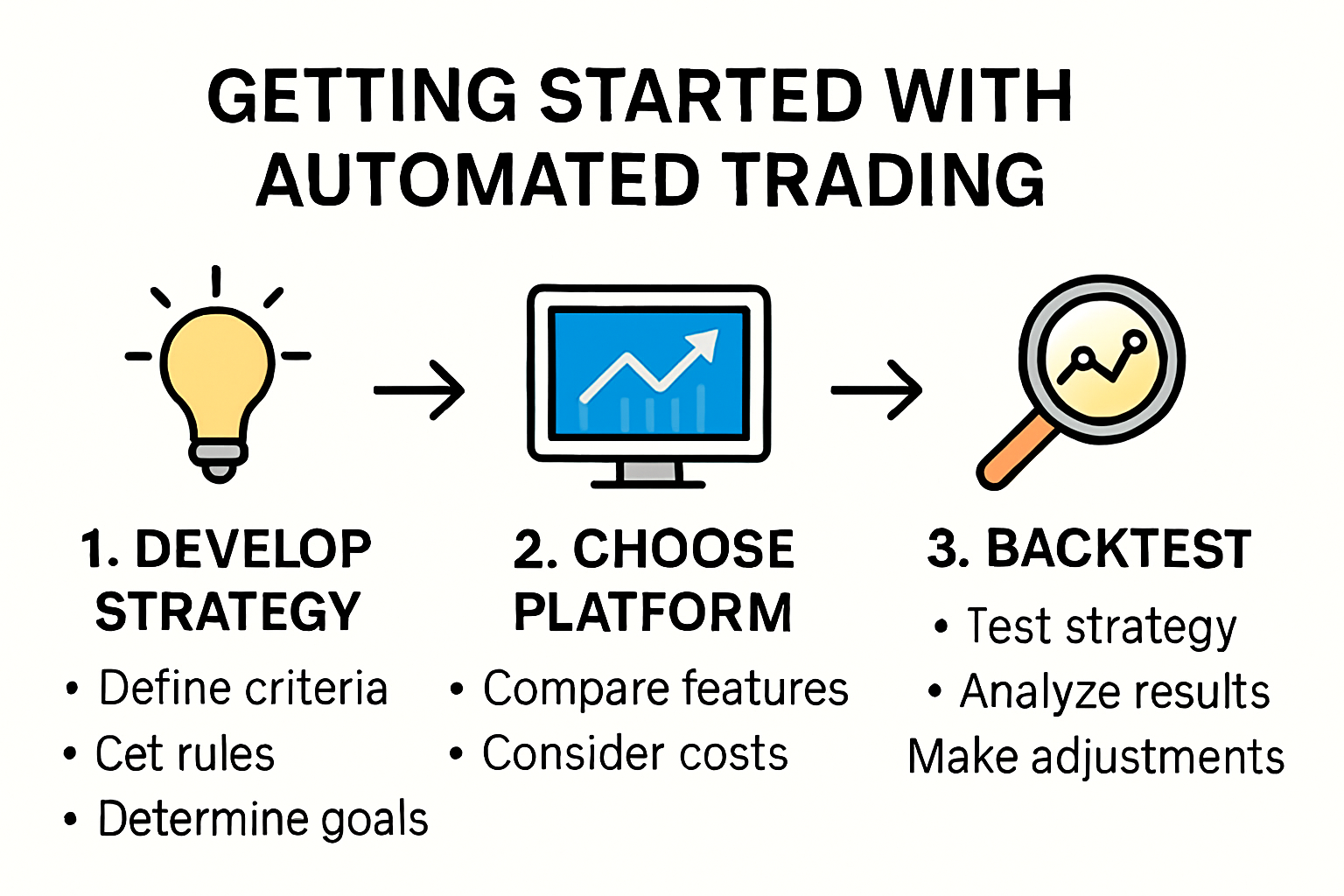
Developing Your Initial Trading Strategy
The foundation of successful automated trading lies in crafting a clear, well-defined strategy. Begin by identifying your primary trading objectives. Are you seeking consistent small gains or targeting larger, less frequent opportunities? Your goals will shape the algorithmic approach you develop.
Market Research is crucial at this stage. Study historical price movements, understand market dynamics, and identify potential trading patterns. Technical analysis becomes your primary tool for strategy development. Analyze indicators like moving averages, relative strength index (RSI), and volume trends to create a robust trading framework.
Start by documenting your strategy rules explicitly. Define precise entry and exit conditions, position sizing parameters, and risk management protocols. These rules must be unambiguous and translatable into computer code. The more specific your strategy, the easier it becomes to program and backtest.
Technical Preparation and Platform Selection
Choosing the right technological infrastructure determines your automated trading success. Select a platform that matches your technical skills and trading objectives. For beginners, platforms with user-friendly interfaces and robust educational resources are recommended.
Backtesting represents a critical preparatory step. Use historical market data to simulate your trading strategy and evaluate its potential performance. Most advanced trading platforms offer comprehensive backtesting tools that allow you to assess strategy effectiveness across different market conditions.
Pay close attention to performance metrics during backtesting. Look beyond simple profit figures and examine parameters like maximum drawdown, win rate, and risk-adjusted returns. A strategy that appears profitable might reveal hidden vulnerabilities when rigorously tested.
Implementation and Continuous Monitoring
Once your strategy passes backtesting, transition to paper trading or small-scale live trading. This approach allows you to validate your algorithm’s real-world performance with minimal financial risk. Start with small position sizes and gradually increase as you gain confidence in your system.
Set up comprehensive monitoring mechanisms. Even automated systems require human oversight. Establish alerts for unexpected performance deviations, and be prepared to pause or adjust your strategy if it consistently underperforms.

Learn advanced technical analysis techniques to refine your understanding of market dynamics and enhance your automated trading approach. Remember that successful automated trading is an ongoing learning process requiring patience, discipline, and continuous adaptation.
For readers wanting a clear roadmap to starting automated trading, the following table breaks the process into simple, actionable steps outlined within the guide:
| Step | What it Involves |
|---|---|
| 1. Develop Trading Strategy | Define objectives, analyze markets, create explicit strategy rules |
| 2. Technical Preparation & Platform | Select user-friendly platform, conduct thorough backtesting |
| 3. Implementation & Monitoring | Start with paper trading/small positions, set up alerts, supervise performance |
Use this step-by-step summary to guide your initial journey into automated trading.
Remember that no single strategy guarantees success. Automated trading demands ongoing education, strategic refinement, and a willingness to adapt to changing market conditions. Your first algorithm is just the beginning of a sophisticated trading journey.
Frequently Asked Questions
What is automated trading?
Automated trading is a method where computer algorithms execute trades based on predefined strategies without constant manual intervention. It allows traders to automate their trading processes, reducing emotional decision-making.
How can beginners start with automated trading?
Beginners can start by selecting user-friendly trading platforms, developing a clear trading strategy, and backtesting their strategies with historical data to evaluate their potential performance before risking real capital.
What are the risks associated with automated trading?
The risks of automated trading include technical failures such as software glitches, unexpected market volatility, and the potential for significant financial losses if risk management is not effectively implemented.
What should I consider when choosing an automated trading platform?
When choosing an automated trading platform, consider user-friendliness, backtesting capabilities, risk management tools, and the availability of customer support to ensure it aligns with your trading goals.
Ready to Automate Your Trading Journey with Expert Support?
Getting started with automated trading can feel overwhelming. The search for reliable strategies, trustworthy signals, and hands-on support is tough for both new and curious traders. If you are looking to minimize emotional decisions, protect your capital, and put the article’s step-by-step advice into practice, FrankFX is the solution you need. We empower beginners with tailored education, proven automated trading tools, and a responsive trading community designed for real-time growth.
Take the next step with FrankFX and unlock access to:
- Real signals and ready-to-use robots that let you automate trades with confidence
- Learning resources and live mentorship so you can build and test your own strategies, just like the article recommends
- Exclusive features for VIP members including market analysis, live sessions, and daily support
Fast-track your progress. Make your move today with FrankFX and start turning market knowledge into trading results.
Recommended
- Technical Analysis Explained: A 2025 Guide for Traders and Investors 2025
- Currency Pairs Explained for Traders and Investors 2025 2025
- FRANKFX COPY TRADING | FRANKFX TRADING ACADEMY
- Smart Money Concept Mastery: Trade Like the Banks (FREE) | FRANKFX TRADING ACADEMY