Every time you trade forex, you pay more than you think. So what is spread in forex ? .The tiny difference between the buy and sell price can seem harmless, but that hidden fee is more powerful than most realize. Even a 1-pip difference in spread can add up to hundreds of dollars over time for active traders. Most people obsess over currency movements, but they forget that understanding spreads can make or break your profits in the long run. Ready to see why the smallest numbers might have the biggest impact on your trading results?
Table of Contents
- Understanding The Basics Of Forex Spread
- Different Types Of Spreads Explained
- How Spread Affects Your Trading Costs
- Tips To Minimize Spread In Live Trading
Quick Summary
| Takeaway | Explanation |
|---|---|
| Understand spreads’ impact on profits | The difference between bid and ask prices affects trading costs directly and can influence overall profitability. |
| Choose major currency pairs for lower spreads | Trading major pairs typically results in tighter spreads, reducing transaction costs and increasing potential profits. |
| Monitor market conditions for optimal timing | Trading during peak hours can lead to lower spreads, improving profit margins by reducing transaction costs. |
| Select the right trading instruments | Not all currency pairs have equal spreads; strategic selection can minimize costs and enhance profitability. |
| Adjust strategies based on spread types | Understanding fixed vs variable spreads helps tailor trading strategies to market conditions, optimizing cost management. |
Understanding the Basics of Forex Spread
Forex trading revolves around understanding key financial mechanisms, and the spread is a fundamental concept that can significantly impact a trader’s profitability. Learn more about trading fundamentals to build a solid foundation in forex markets.
What Exactly Is a Spread in Forex ?
At its core, a forex spread represents the difference between the buying (bid) and selling (ask) price of a currency pair. Think of it as the cost of executing a trade. When you enter a forex transaction, you are not just trading currencies but also paying a small fee to your broker. The U.S. Securities and Exchange Commission defines currency exchange rates as the price representing how much it costs to buy one country’s currency using another country’s currency.
Traders encounter two primary price points in every transaction: the bid price (what buyers are willing to pay) and the ask price (what sellers are willing to accept). The spread is the gap between these two prices, typically measured in pips – the smallest price movement in forex trading. A narrower spread indicates higher liquidity and lower trading costs, while a wider spread suggests less liquidity and potentially higher transaction expenses.
How Spreads Impact Trading Strategies
Understanding spreads is crucial for developing effective trading strategies. Tight spreads mean lower transaction costs, which can be especially important for high-frequency traders or those working with smaller trading accounts. The International Monetary Fund notes that spread variations can be influenced by multiple economic factors, including domestic and foreign rates of time preference.
Different currency pairs will have varying spread characteristics. Major currency pairs like EUR/USD typically have tighter spreads due to high trading volume and liquidity. In contrast, exotic or less frequently traded currency pairs might have wider spreads, increasing the cost of trading and potentially reducing potential profits.
Traders must factor spreads into their overall trading costs and strategy. A seemingly profitable trade can quickly become less attractive when accounting for the spread. Professional traders constantly monitor spread conditions, adjusting their entry and exit points to minimize transaction costs and maximize potential returns.
Ultimately, comprehending forex spreads is not just about understanding numbers but about developing a strategic approach to trading that considers every potential cost and market condition.
Different Types of Spreads Explained
Forex trading involves multiple spread types, each with unique characteristics that impact trading strategies and costs. Learn advanced trading techniques to understand these nuanced market mechanisms more comprehensively.
Fixed vs Variable Spreads
In forex trading, spreads come in two primary configurations: fixed and variable. Fixed spreads remain constant regardless of market conditions, providing traders with predictable transaction costs. These spreads are typically offered by market makers who internally manage trade execution. According to research from accounting insights, fixed spreads are particularly beneficial for traders seeking consistent cost structures.
Variable spreads, conversely, fluctuate based on market liquidity and volatility. During periods of high market activity or significant economic announcements, these spreads can widen dramatically. The International Monetary Fund notes that spread variations reflect complex interactions between market dynamics, risk perception, and trading volume.
Comparing fixed and variable spreads can help traders choose the option that best fits their trading strategy and risk tolerance. Below is a summary of their key differences as discussed in the article:
| Feature | Fixed Spread | Variable Spread |
|---|---|---|
| Cost Predictability | Costs remain constant | Costs fluctuate based on market changes |
| Offered By | Market makers | ECN/STP brokers |
| Response to Volatility | Unchanged during high volatility | Widens during high volatility |
| Best For | Those seeking predictable transaction fees | Traders willing to accept variable costs |
| Market Conditions | Less responsive to real-time changes | Adjusts to liquidity and volume |
Bid-Ask and Cross-Currency Spreads
Bid-ask spreads represent the fundamental pricing mechanism in forex markets. The bid price indicates what buyers are willing to pay, while the ask price shows what sellers demand. Wikipedia’s comprehensive overview highlights that these spreads serve as critical indicators of market liquidity and transaction costs.
Cross-currency spreads emerge when trading currency pairs that do not involve the US dollar. These spreads can be more complex, involving additional conversion steps and potentially higher transaction costs. Traders must carefully calculate the implied spread when executing cross-currency trades, as the additional complexity can impact overall trading profitability.
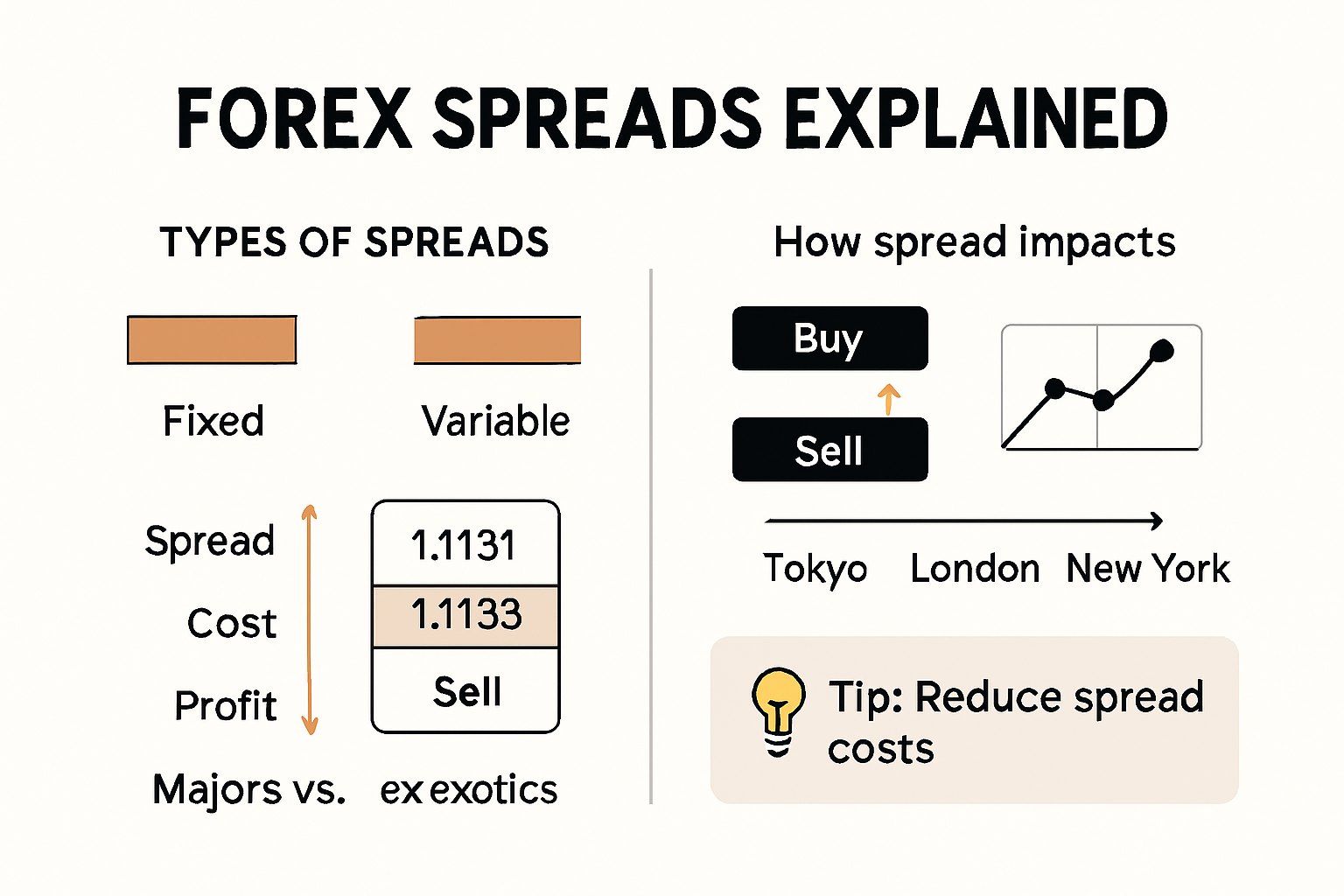
Understanding the nuanced differences between spread types empowers traders to make more informed decisions. Each spread configuration presents unique advantages and challenges, requiring traders to adapt their strategies based on market conditions, trading style, and individual risk tolerance. Successful forex trading demands not just knowledge of these spread types, but the ability to strategically navigate their implications in real-time market environments.
How Spread Affects Your Trading Costs
Forex trading requires a nuanced understanding of how spreads directly impact overall trading expenses. Explore advanced trading strategies to optimize your cost management approach.
Direct Impact on Transaction Expenses
Spreads represent an inherent cost in forex trading that can significantly influence profitability. The U.S. Securities and Exchange Commission explains that the bid-ask spread represents the fundamental cost of trading, where wider spreads translate to higher transaction expenses. Every pip in the spread means additional money spent on executing trades.
Traders must calculate these costs meticulously. A seemingly small spread of 1-2 pips might appear insignificant, but for high-frequency traders or those managing large trading volumes, these incremental costs can substantially erode potential profits.
According to Professor Ian Giddy from NYU’s Stern School of Business, spread variations correlate with market volatility, trading volume, and even specific days of the week.
Spread Costs in Different Trading Scenarios
The impact of spreads varies dramatically across different trading approaches. Day traders and scalpers, who execute multiple trades rapidly, feel the spread’s effect more acutely. Each trade incurs a spread cost, meaning these traders must consistently overcome these expenses to remain profitable.
Long-term investors might experience less immediate spread impact, but the cumulative effect remains significant. The U.S. Bureau of Labor Statistics highlights that bid-ask spreads represent a major fee investors encounter when buying and selling financial instruments.
For instance, trading major currency pairs like EUR/USD typically involves tighter spreads, reducing transaction costs. Conversely, exotic currency pairs might feature wider spreads, increasing the break-even threshold for potential profits. Traders must strategically select currency pairs and trading strategies that minimize spread-related expenses.
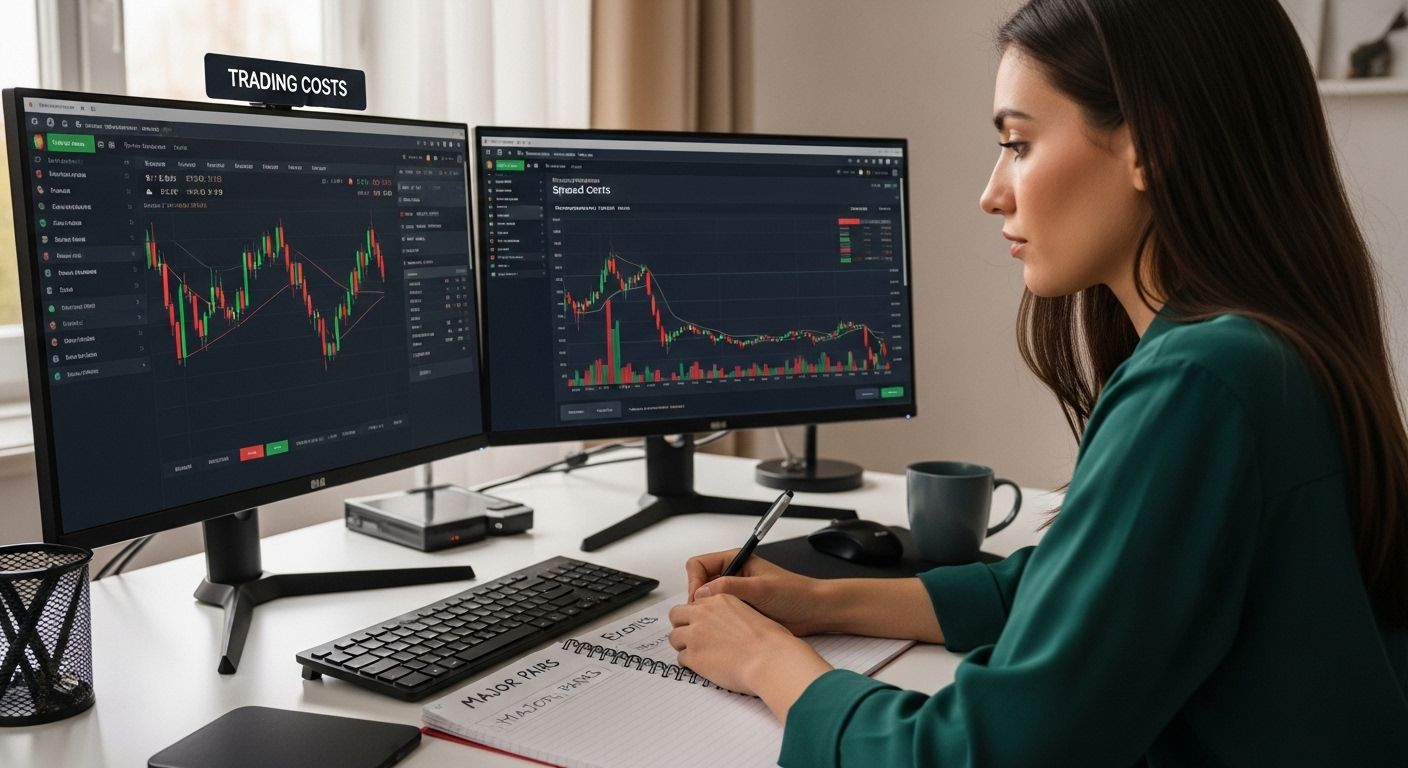
Understanding spread mechanics goes beyond mere calculation. Successful traders develop sophisticated strategies that account for spread variations, market conditions, and individual trading goals. By treating spreads as an integral component of trading expenses rather than an afterthought, traders can make more informed decisions and optimize their overall financial performance.
Tips to Minimize Spread in Live Trading
Minimizing forex spreads requires strategic planning and a deep understanding of market dynamics. Discover advanced trading techniques to enhance your spread management skills.
Strategic Trading Timing
Trading during peak market hours can significantly reduce spread costs. According to research from accounting insights, central banks and market makers heavily influence spread sizes through monetary policies and market interventions. The most liquid trading sessions typically occur when multiple financial markets overlap, such as during the London-New York session crossover, where spreads tend to be tighter.
Traders should avoid trading during low-liquidity periods, such as market holidays or late-night sessions in major financial centers. Forex traders resource highlights that market makers adjust spread sizes based on trading volume and market activity, making timing crucial for minimizing transaction costs.
Choosing the Right Trading Instruments
Not all currency pairs are created equal when it comes to spreads. Major currency pairs like EUR/USD, USD/JPY, and GBP/USD typically offer the tightest spreads due to their high liquidity. Wikipedia’s comprehensive overview reveals that market liquidity directly impacts spread sizes, with more frequently traded pairs experiencing lower transaction costs.
Exotic currency pairs and less commonly traded instruments often come with wider spreads, increasing trading expenses. Experienced traders strategically select currency pairs that offer the most favorable spread conditions, balancing potential profit opportunities with transaction costs. This approach requires continuous market analysis and a deep understanding of global economic factors.
Additionally, traders can minimize spreads by:
- Using ECN (Electronic Communication Network) brokers
- Trading during peak market hours
- Avoiding trading around major economic announcements
- Comparing spread costs across different brokers
Selecting trading times and currency pairs wisely can significantly impact the spread costs you incur. The following table summarizes strategies for minimizing spread based on information already discussed:
| Strategy | Effect on Spread | Notes |
|---|---|---|
| Trade during peak market hours | Lowers spreads | Higher liquidity during sessions like London-New York overlap |
| Choose major currency pairs | Reduces transaction cost | EUR/USD, USD/JPY, GBP/USD typically offer tightest spreads |
| Avoid exotic currency pairs | Prevents wide spreads | Less liquidity leads to broader spreads |
| Use ECN brokers | Potentially lowers costs | ECN brokers often offer tighter, market-driven spreads |
| Avoid trading during announcements | Reduces volatility | Spreads can widen significantly during economic news |
Successful spread management goes beyond simple cost-cutting. It involves a holistic approach to trading that considers market conditions, broker selection, and strategic timing. Traders who master spread optimization can significantly improve their overall trading performance, transforming what seems like a minor cost into a substantial advantage.
Remember, while minimizing spreads is important, it should not come at the expense of other critical trading considerations. A balanced approach that considers spread costs alongside market opportunities, risk management, and individual trading strategies will ultimately yield the most consistent results.
Frequently Asked Questions
What is a forex spread?
A forex spread is the difference between the buying (ask) price and the selling (bid) price of a currency pair. It represents the cost of executing a trade and is measured in pips.
How do spreads affect trading profits?
Spreads can significantly impact trading profits as higher spreads increase transaction costs. A tight spread is essential for maximizing profits, especially for active traders and those with smaller accounts.
What are the different types of forex spreads?
There are two primary types of forex spreads: fixed and variable. Fixed spreads remain constant regardless of market conditions, while variable spreads fluctuate based on market liquidity and volatility.
How can traders minimize spreads in their trading activities?
Traders can minimize spreads by choosing major currency pairs, trading during peak market hours, using ECN brokers, and avoiding trading during significant economic announcements. These strategies help reduce overall transaction costs.
Stop Letting Hidden Forex Costs Hurt Your Profits
Are you tired of seeing your hard-earned profits slip away due to unpredictable spreads and transaction fees? Many traders struggle to achieve their goals because even the smallest difference in spread can have a major impact on long-term results. You just read about how spread size directly affects every trade and why understanding this cost is crucial for your trading strategy. Now it is time to take action and protect your bottom line.
Join FrankFX today for expert education, daily trading signals, and access to advanced tools that help you analyze spreads in real time. Discover our free forex calculators and indicators so you can calculate true trading costs before entering any position. Upgrade to a VIP membership to unlock mentorship, live sessions, and strategies built to maximize your profits—no matter what the market is doing. Take the guesswork out of managing spreads and start trading smarter. Your edge starts now.
Recommended
- Currency Pairs Explained for Traders and Investors 2025 2025
- Technical Analysis Explained: A 2025 Guide for Traders and Investors 2025
- Smart Money Concept Mastery: Trade Like the Banks (FREE) | FRANKFX TRADING ACADEMY
- What is Forex | FRANKFX TRADING ACADEMY