Options trading gives investors a unique way to participate in the market without committing to own the asset itself. Most people know stocks, but few realize that options contracts allow you to control 100 shares of stock with just a single trade. This power is not just for Wall Street pros, and even beginners can use options to protect their portfolios or make money in ways stocks alone cannot match.
Table of Contents
- What Are Options? Exploring The Basics
- Why Options Trading Matters In Financial Markets
- How Options Work: Key Mechanics And Terms
- Understanding Risk And Reward In Options Trading
- Real-World Applications Of Options In Trading Strategies
Quick Summary
| Takeaway | Explanation |
|---|---|
| Options provide risk management tools. | Options contracts serve as insurance, protecting investments against market downturns. |
| Options allow for income generation. | Traders can collect premiums through strategies like covered calls, creating additional revenue streams. |
| Understanding key contract elements is crucial. | Key components include strike price, expiration date, and premium, impacting options’ value and execution. |
| Traders can profit in various market conditions. | Strategic options strategies enable profits regardless of market movements, enhancing financial flexibility. |
| Risk management is essential in options trading. | Traders must be aware of potential losses and implement strategies to safeguard their investments. |
What are Options? Exploring the Basics
Options trading represents a sophisticated financial instrument that allows traders to manage risk and potentially generate income through strategic contract negotiations. At its core, an option is a financial derivative contract that provides the buyer the right, but not the obligation, to buy or sell an underlying asset at a predetermined price within a specific timeframe.
Below is a comparison table summarizing the core characteristics of call and put options, providing a clear overview for readers new to options contracts.
| Option Type | Purpose | Buyer Rights | Use Case |
|---|---|---|---|
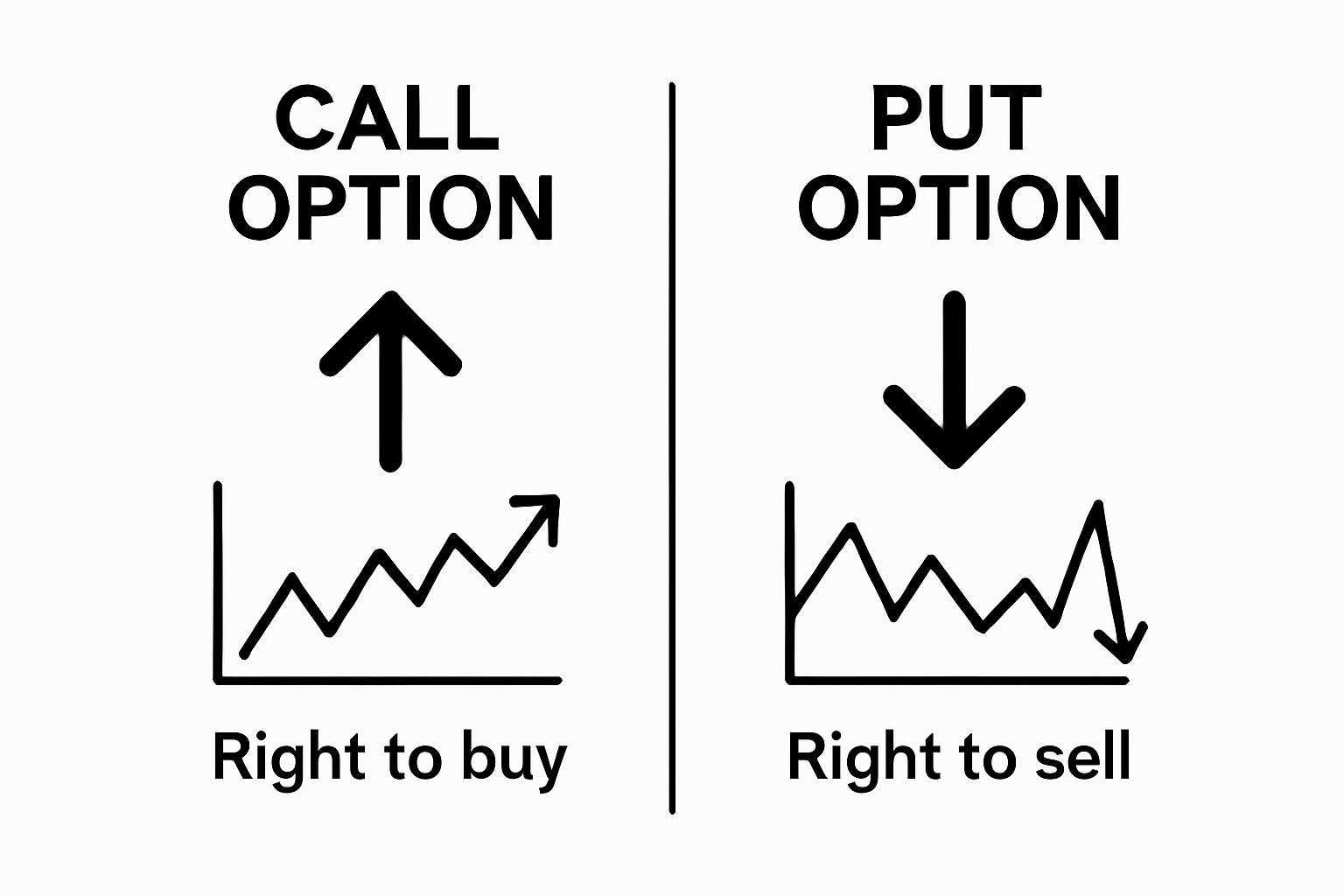
| Call Option | Right to buy the underlying asset at strike price | Can purchase asset before expiration | Expect asset price to increase |
| Put Option | Right to sell the underlying asset at strike price | Can sell asset before expiration | Expect asset price to decrease |
Understanding Option Contracts
In the world of options, two primary types of contracts exist: call options and put options. A call option gives the trader the right to purchase an asset at a specified price, while a put option grants the right to sell an asset at a predetermined price.
 According to U.S. Securities and Exchange Commission, these contracts are traded on various exchanges and can cover multiple underlying assets including stocks, commodities, and market indices.
Key characteristics of options contracts include:
- Strike Price: The predetermined price at which the underlying asset can be bought or sold
- Expiration Date: The specific date when the option contract becomes invalid
- Premium: The upfront cost paid to purchase the option contract
How Options Trading Works
Options trading provides traders with unique strategic opportunities. Unlike traditional stock trading, options allow for more flexible risk management. Traders can hedge existing positions, generate additional income through premium collection, or speculate on potential market movements without directly owning the underlying asset.
When you purchase an options contract, you are essentially buying the potential to execute a trade at a future date. If market conditions become favorable, you can exercise the option. If not, you can simply let the contract expire, limiting your potential loss to the initial premium paid. Check out our detailed guide on volatility index analysis to understand how market conditions impact options trading strategies.
Why Options Trading Matters in Financial Markets
Options trading plays a critical role in modern financial markets, offering sophisticated investors and traders powerful tools for risk management, portfolio diversification, and strategic financial planning. These complex financial instruments provide unique opportunities that extend far beyond traditional investment approaches.
Risk Management and Portfolio Protection
In volatile market environments, options serve as strategic “insurance policies” for investors. By utilizing options contracts, traders can protect their existing investments against potential market downturns. According to Yale School of Management, options introduce nonlinear dynamics into portfolio management, allowing investors to design complex strategies that mitigate potential losses.
Key risk management benefits include:
- Downside Protection: Limiting potential losses on existing stock positions
- Hedging Strategies: Creating defensive positions against market volatility
- Income Generation: Collecting premiums through strategic option writing
Strategic Financial Flexibility
Options trading offers unparalleled financial flexibility that traditional investments cannot match. Traders can construct sophisticated investment strategies that generate income, speculate on market movements, or manage risk with precision. Sophisticated investors use options to create complex positions that can profit in multiple market scenarios without directly purchasing underlying assets.
For traders looking to enhance their understanding of market dynamics, our guide on volatility index trading provides deeper insights into advanced trading techniques. This approach allows investors to potentially generate returns in bullish, bearish, and neutral market conditions, making options a versatile financial instrument.
By providing a mechanism to manage risk, generate income, and create strategic investment opportunities, options trading has become an essential component of modern financial markets. Traders who understand and effectively utilize options can develop more robust and adaptable investment strategies.
How Options Work: Key Mechanics and Terms
Options trading involves a sophisticated set of mechanisms that enable traders to manage financial risk and create strategic investment opportunities. Understanding the fundamental components and interactions of these contracts is crucial for effective options trading.
Core Option Contract Components
Every options contract consists of several critical elements that define its structure and potential value. According to Massachusetts Institute of Technology, these fundamental components determine how traders can utilize these financial instruments.
The following table outlines and defines the essential components found in every standard options contract, offering readers a quick reference for these key terms.
| Component | Definition |
|---|---|
| Underlying Asset | The financial instrument (like a stock, commodity, or index) the option is based on |
| Strike Price | The specified price at which the option can be exercised |
| Expiration Date | The deadline when the option contract ceases to be valid |
| Premium | The upfront cost paid by the buyer to purchase the contract |
Key contract components include:
- Underlying Asset: The financial instrument (stock, commodity, index) on which the option is based
- Strike Price: The predetermined price at which the option can be exercised
- Expiration Date: The specific date when the option contract becomes invalid
- Premium: The upfront cost paid to purchase the contract
Option Pricing and Valuation Mechanics
The value of an options contract is not static but dynamically determined by multiple factors. Intrinsic value represents the immediate profit potential if the option were exercised right now, while time value reflects the potential for future price movements before expiration.
Traders must understand that options are priced based on complex mathematical models that consider variables like current market price, volatility, time remaining until expiration, and potential future price movements.
Learn more about advanced trading techniques in our forex trading guide to deepen your understanding of these intricate financial strategies.
Options can be exercised in two primary styles: American (which can be executed at any point before expiration) and European (which can only be exercised at the specific expiration date). This flexibility allows traders to implement diverse strategies tailored to their specific risk tolerance and market outlook.
Understanding Risk and Reward in Options Trading
Options trading represents a complex financial landscape where potential rewards are intrinsically linked with carefully calculated risks. Understanding the delicate balance between potential gains and potential losses is crucial for traders seeking to navigate this sophisticated investment strategy effectively.
Risk Exposure in Options Trading
Traders must recognize that options trading can involve significant financial risk.
This table provides an at-a-glance view of the main risks associated with trading options, helping readers to understand what factors may impact their investments.
| Risk Factor | Description |
|---|---|
| Premium Loss | Loss of the initial amount paid if the option expires worthless |
| Leverage Risk | Potential for amplified losses due to the leverage built into options |
| Market Volatility | Rapid, unexpected price changes that can greatly affect option values |
Potential risk factors include:
- Premium Loss: Complete loss of the initial contract premium
- Leverage Risk: Amplified potential for financial losses due to contract mechanics
- Market Volatility: Unexpected price movements can dramatically impact option values
Reward Potential and Strategic Considerations
While options trading carries inherent risks, it simultaneously offers unique opportunities for strategic investors. Sophisticated traders can design complex strategies that limit downside exposure while creating multiple potential profit scenarios. The key lies in understanding how different option strategies can be constructed to manage risk effectively.
Learn more about comprehensive risk management techniques to develop a nuanced approach to options trading. By implementing disciplined risk control mechanisms, traders can transform potential volatility from a threat into a strategic advantage.
Successful options trading requires a deep understanding of market dynamics, thorough research, and a disciplined approach to risk management.

Real-World Applications of Options in Trading Strategies
Options trading transcends theoretical concepts, offering sophisticated traders powerful tools for navigating complex market environments. By implementing strategic approaches, investors can transform potential market volatility into calculated financial opportunities across diverse investment scenarios.
Hedging and Portfolio Protection
One primary real-world application of options involves portfolio risk management. Investors can utilize options contracts to protect existing investments against potential market downturns. According to research analyzing individual investor behavior, strategic options deployment allows traders to create defensive positions that mitigate potential losses.
Key hedging strategies include:
- Protective Put Strategy: Purchasing put options to insure against potential stock price declines
- Covered Call Writing: Generating additional portfolio income while providing limited downside protection
- Portfolio Insurance: Creating systematic risk management mechanisms
Income Generation and Advanced Trading Techniques
Sophisticated traders leverage options beyond traditional investment approaches. These financial instruments enable investors to generate consistent income streams through strategic contract writing and complex trading methodologies. Learn advanced trading techniques with our swing trading strategies guide to expand your understanding of market dynamics.
Options trading allows investors to profit in multiple market conditions by constructing strategies that generate returns regardless of whether markets move up, down, or remain stagnant. This flexibility distinguishes options from traditional buy-and-hold investment approaches, providing traders with unprecedented strategic versatility.
Transform Your Options Knowledge Into Real Trading Results
Navigating options trading for the first time can feel overwhelming. Concepts like strike price, expiration date, and risk management introduce new layers of complexity for beginners. If you worry about making costly mistakes, missing key market signals, or failing to use the right strategy, you are not alone. Many traders want to move from understanding the basics to actually executing smart trades, but they often lack trusted guidance and real-time tools.
It is time to bridge the gap from theory to high-impact trading. At FrankFX, we empower you to put your new knowledge into action. Unlock daily trading signals, join live sessions, and access hands-on mentorship designed to help you master options, forex, and indices. Explore our free trading tools and indicators to enhance your strategies or visit our forex trading guide to build a solid foundation. Take control of your trading future now and join a supportive community ready to help you grow. Visit FrankFX today and turn your understanding of options into consistent trading results.
Frequently Asked Questions
What is an option in trading?
An option is a financial derivative contract that gives the buyer the right, but not the obligation, to buy or sell an underlying asset at a predetermined price within a specific timeframe.
What are the types of options?
The two primary types of options are call options, which allow the buyer to purchase an asset at a specified price, and put options, which grant the right to sell an asset at a predetermined price.
How does options trading work?
Options trading allows traders to manage risk, hedge existing positions, generate income through premiums, or speculate on price movements without directly owning the underlying asset.
What are the risks involved in options trading?
Options trading involves risks such as total premium loss if an option expires worthless, leverage risk that can amplify losses, and market volatility that can drastically impact option values.
Recommended
- Deriv Micro Account
- Automated Trading for Beginners
- Swing Trading for Beginners
- Forex Trading What Is It? Simple Guide for All Traders 2025