Trend following strategies sound simple at first. Over 70 percent of major stock market gains in the last decade came from riding ongoing trends rather than guessing reversals. That sounds easy. But most new traders lose money chasing tops and bottoms when the real edge is staying with the crowd just a little longer. Where everyone else is predicting, trend followers are just confirming what’s already working—and that often makes all the difference.
Table of Contents
- What Are Trend Following Strategies?
- Why Trend Following Matters In Trading
- How Trend Following Strategies Work
- Key Concepts Behind Trend Following Strategies
Quick Summary
| Takeaway | Explanation |
|---|---|
| Focus on existing trends | Trend following strategies capitalize on rising or falling prices rather than predicting reversals. |
| Use technical indicators | Employ tools like moving averages and momentum indicators to identify trends and confirm signals. |
| Establish clear rules | Define entry and exit criteria to guide trading decisions, minimizing emotional bias. |
| Implement risk management | Use stop-loss orders and position sizing to protect against significant losses in turbulent markets. |
| Diversify across markets | Spread investments across various assets to reduce overall risk and volatility in your portfolio. |
What are Trend Following Strategies?
Trend following strategies represent a fundamental approach in trading where investors aim to capitalize on the momentum of financial markets by identifying and riding established price trends. These strategies are based on the premise that asset prices tend to move in sustained directions over time, presenting opportunities for traders to generate profits.
Core Principles of Trend Following
At its essence, trend following is about detecting directional movement in financial markets and making trading decisions aligned with that movement. The strategy operates on a simple yet powerful principle: prices that are rising will likely continue rising, and prices that are falling will likely continue falling. Unlike strategies that attempt to predict market reversals, trend followers focus on confirming existing momentum rather than forecasting potential changes.
Traders employing trend following strategies typically use technical analysis tools to identify these trends. These might include moving averages, trend lines, and momentum indicators that help visualize the direction and strength of market movements. The core objective is to enter trades in the direction of the prevailing trend and remain in those positions until evidence suggests the trend is weakening or reversing.
Key Characteristics of Trend Following
Trend following strategies are characterized by several distinctive features:
- Long-term perspective: Traders look at broader market movements rather than short-term fluctuations
- Systematic approach: Decisions are made based on predefined rules and objective signals
- Risk management: Strategies often include built-in stop-loss mechanisms to limit potential losses
According to academic research exploring trend following dynamics, these strategies have demonstrated effectiveness across various financial markets, including stocks, commodities, and currencies. By understanding technical analysis fundamentals, traders can better implement these trend following approaches and potentially improve their trading performance.
Below is a table summarizing the core principles and key characteristics that define trend following strategies, making it easy to distinguish their fundamental components at a glance.
| Aspect | Description |
|---|---|
| Core Principle | Align trading decisions with established market trends, confirming existing momentum rather than predicting reversals. |
| Strategic Focus | Emphasize long-term market movements and maintain positions until the trend weakens or reverses. |
| Systematic Approach | Utilize predefined rules and objective technical indicators to guide entry and exit decisions. |
| Risk Management | Incorporate stop-loss mechanisms, position sizing, and portfolio diversification to limit potential losses. |
| Technical Tools | Rely on moving averages, trend lines, and momentum indicators for identifying and confirming trends. |
Why Trend Following Matters in Trading
Trend following strategies offer traders a systematic approach to navigating financial markets by providing a structured method for making investment decisions based on observable price movements. Unlike speculative trading that relies on prediction and intuition, trend following offers a disciplined framework for capturing market momentum and managing investment risk.
Psychological and Strategic Advantages
One of the most significant benefits of trend following is its ability to remove emotional decision-making from trading. By establishing clear rules and objective criteria for entering and exiting positions, traders can mitigate the psychological biases that often lead to poor investment choices.
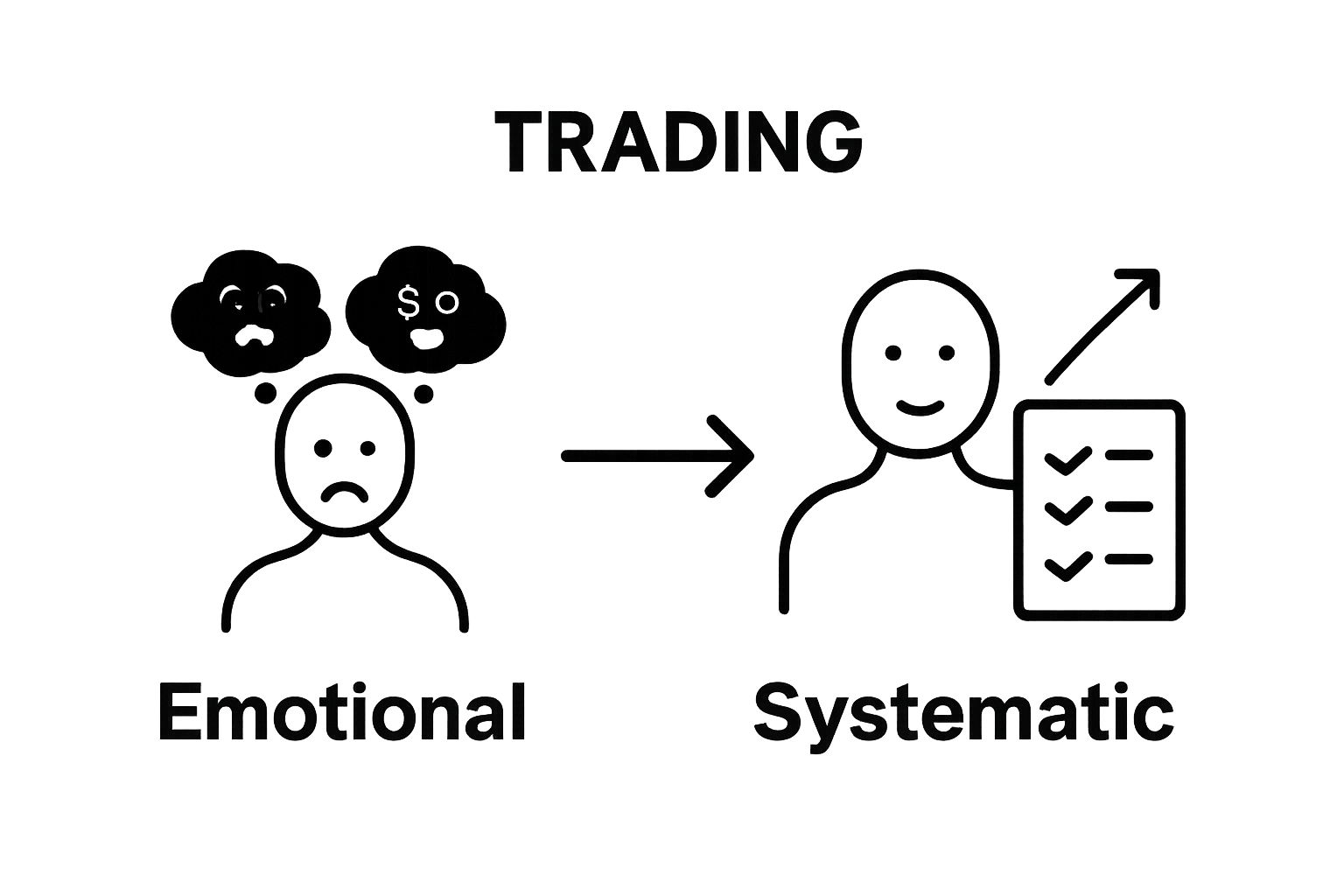 Emotional trading typically results in impulsive decisions driven by fear or greed, whereas trend following strategies encourage a more rational, data-driven approach.
Moreover, trend following strategies provide a consistent framework for managing market uncertainty. Instead of attempting to predict precise market turning points, traders focus on riding established market movements. This approach acknowledges the fundamental unpredictability of financial markets while offering a pragmatic method for generating potential returns.
Risk Management and Performance Potential
Trend following strategies excel in risk management by incorporating built-in mechanisms to limit potential losses. Key risk management features include:

- Automatic stop-loss triggers: Predetermined exit points protect against significant portfolio drawdowns
- Position sizing rules: Limits exposure to any single market position
- Diversification across multiple markets: Reduces overall portfolio volatility
According to research investigating trend following performance, these strategies demonstrate particular effectiveness in markets experiencing both bullish and bearish trends.
The table below outlines the main risk management features found in trend following strategies and explains their role in helping traders control losses and portfolio volatility.
| Risk Management Feature | Function in Trend Following Strategies |
|---|---|
| Automatic Stop-Loss Triggers | Predetermine exit points to limit losses during adverse market movements |
| Position Sizing Rules | Control the amount invested in each position to manage risk exposure |
| Diversification Across Markets | Spread investments over various asset classes to reduce overall portfolio volatility |
How Trend Following Strategies Work
Trend following strategies operate through a systematic approach that transforms market price movements into actionable trading signals. By employing technical analysis tools and mathematical indicators, traders can identify and validate market trends, creating a structured method for making investment decisions.
Technical Indicators and Signal Generation
The core mechanism of trend following involves using technical indicators to detect and confirm market momentum. These indicators help traders understand whether an asset is moving in a consistent direction and gauge the strength of that movement. Common tools include moving averages, which smooth out price fluctuations and reveal underlying directional trends, and momentum oscillators that measure the rate of price changes.
Traders typically use multiple indicators to cross-validate signals, reducing the likelihood of false trend identifications. For instance, a trader might combine a moving average crossover with a relative strength index (RSI) to confirm both trend direction and potential momentum strength before entering a trade.
Entry and Exit Mechanism
Trend following strategies establish clear rules for entering and exiting positions based on predefined criteria. These rules are designed to:
- Capture substantial market movements: Enter trades when a trend is confirmed and appears strong
- Minimize false signals: Use multiple indicators to validate trend direction
- Protect capital: Implement automatic stop-loss mechanisms to limit potential losses
A typical trend following approach might involve entering a long position when a short-term moving average crosses above a longer-term moving average, signaling bullish momentum. Conversely, a sell signal would be generated when the short-term average drops below the longer-term average.
Swing trading techniques share similar principles of momentum detection, offering traders additional insights into trend identification. According to research examining trend-following performance in stock markets, these strategies can be particularly effective when carefully implemented with robust signal validation mechanisms.
Key Concepts Behind Trend Following Strategies
Trend following strategies are grounded in several fundamental principles that distinguish them from other trading approaches. These concepts form the philosophical and practical foundation of a disciplined, systematic method for navigating financial markets and generating potential investment returns.
Market Movement and Psychological Foundations
At the core of trend following is the recognition that financial markets are driven by collective human behavior and psychological patterns. Market momentum emerges from the aggregate actions of traders, investors, and institutional players, creating observable price trends that can be anticipated and potentially leveraged. Unlike contrarian strategies that attempt to predict market reversals, trend following embraces the idea that established market movements tend to persist for measurable periods.
This approach acknowledges the complex dynamics of market psychology, recognizing that investor sentiment, economic indicators, and collective decision-making contribute to sustained price directions. By focusing on observable trends rather than attempting to predict future movements, trend following strategies provide a more pragmatic framework for investment decision-making.
Critical Analytical Components
Successful trend following relies on several key analytical components that enable traders to identify and validate market trends:
- Technical indicator analysis: Using mathematical tools to measure price momentum
- Signal confirmation mechanisms: Cross-referencing multiple indicators to reduce false trend signals
- Risk management protocols: Establishing predefined exit strategies to protect investment capital
The mathematical foundation of trend following involves sophisticated yet systematic approaches to interpreting market data. Traders utilize various technical indicators like moving averages, relative strength index (RSI), and channel breakouts to develop a comprehensive understanding of market movements.
Exploring advanced swing trading strategies can provide additional insights into trend detection techniques. According to research documenting trend following methodologies, these strategies offer a structured approach to capturing market momentum across different financial instruments.
Unlock Real Trend Following Power with FrankFX
Struggling to make sense of market momentum or worried your trend following strategies lack consistency? If you feel overwhelmed by technical terms like moving averages, signals, and risk management, you are not alone. Many traders find themselves caught between complex analysis and emotional decision-making. Turning technical knowledge into real results can feel frustrating without expert guidance and the right tools.

At FrankFX, we help you transform understanding into action. Sign up for our VIP memberships to access daily trading signals, mentorship, and live sessions that bring clarity to your decisions. Try out our free forex indicators and signals to see how systematic strategies work in real time. Want to deepen your skills now? Dive into our trading with moving averages guide or explore advanced trend detection tools on our site. Do not wait for the next market trend to pass you by. Join the FrankFX community today and start trading smarter with proven strategies and live support.
Frequently Asked Questions
What is a trend following strategy in trading?
Trend following strategies are trading approaches focused on capitalizing on established price movements in financial markets, operating on the premise that rising prices will continue to rise, and falling prices will continue to fall.
How do traders implement trend following strategies?
Traders implement trend following strategies by using technical analysis tools such as moving averages and momentum indicators to identify and confirm market trends, then making trades in the direction of those trends.
What are the key characteristics of trend following strategies?
Key characteristics of trend following strategies include a long-term perspective, a systematic approach based on predefined rules, and robust risk management practices to protect against significant losses.
Why is risk management important in trend following strategies?
Risk management is crucial in trend following strategies as it helps limit potential losses through mechanisms like stop-loss orders, position sizing, and diversification across multiple markets.
Recommended
- Swing Trading for Beginners: Simple Strategies and Tips 2025
- Technical Analysis Explained: A 2025 Guide for Traders and Investors 2025
- Top Swing Trading Strategies for All Market Types 2025
- Trading With Moving Averages: A Simple Guide for All Traders 2025